33 Hours And 20 Minutes: Automattic's Board Tried To Fire Matt Mullenweg And Got Fired Instead
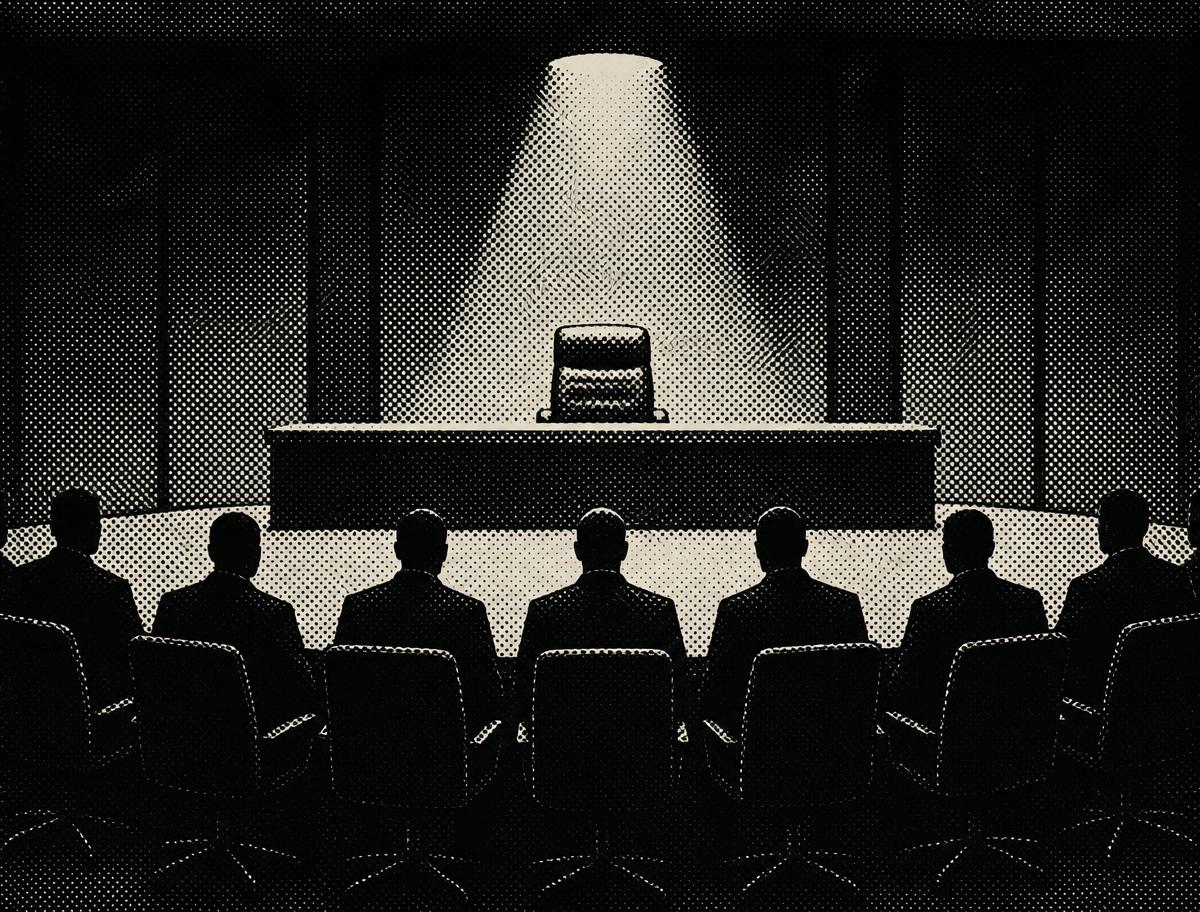
I wrote last week that nobody has ever been placed on a paid leave of absence and then come back to a larger office. I would like to formally withdraw that sentence, apologise to it, and replace it with the following: nobody has ever been placed on a paid leave of absence, come back within a day and a half, and then removed the entire board that put them there.
Until now.
The company's own statement, emailed to TechCrunch after midnight Pacific on Sunday, contains the single most extraordinary clause in modern tech governance:
“Matt was away for only 33 hours and 20 minutes — we're now back to work.”
That is not a press statement. That is a scoreboard.
The timeline, because the timeline is the story
- →Wednesday 9 September: Automattic's board votes to put Mullenweg on a paid leave of absence. CFO Mark Davies is appointed interim CEO. Mullenweg votes against, gets roughly fifty minutes' notice of the resolution, and is refused time to have it reviewed by independent counsel.
- →Wednesday, minutes later: Mullenweg announces his own removal in a company-wide Slack channel, naming Davies, Toni Schneider, Sue Decker and Ann Dunwoody as having "conspired" against him. 404 Media publishes. TechCrunch confirms. Automattic tells The Verge he is "currently on leave" and the board has "full confidence" in Davies.
- →Wednesday–Thursday: this is where a normal corporate coup ends and this one starts. Mullenweg does not go quietly, does not go at all, and reportedly removes other administrators from the company Slack — the one system through which the entire distributed company communicates.
- →Friday 11 September: TechCrunch reports a Slack message in which Mullenweg tells staff he is back in control. "A lot happened in the past 48 hours that we need to sort out, and I hope much of it was a misunderstanding, because I have huge respect and regard for those involved."
- →Saturday 12 September, just after 5pm Eastern: an Automattic spokesperson confirms it. "Matt Mullenweg is the chairman and CEO of Automattic, with full support of the board and if you search online you can see many top executives and Automatticians supporting him as well."
- →Sunday–Monday 14 September: TechCrunch reports the board is out. Schneider resigned. Decker resigned. Dunwoody was removed by Mullenweg. Chief Legal Officer Andy Missan is gone. Mark Davies — the man who was to be interim CEO — is gone.
Four days. One founder, one board, and only one of them still has a job.
"With full support of the board" is doing Olympic-level work
Read Saturday's statement again with Sunday's facts in your hand. Mullenweg is CEO "with full support of the board". True! Because the members who did not support him are no longer on it. This is the corporate equivalent of winning a unanimous vote by escorting the opposition from the building and then counting the room.
The supporting evidence offered was equally magnificent: "if you search online you can see many top executives and Automatticians supporting him as well". TechCrunch, with admirable restraint, noted that this appears to refer to posts on X that Mullenweg has been reposting from his own account. The proof of confidence is a retweet.
There is still no public board statement documenting a formal reinstatement. There is no explanation of why he was removed. There is no explanation of why he is back. At the time TechCrunch published, Sue Decker's name was still sitting on Automattic's public board page while her own LinkedIn had already been updated to say she served until September 2026. Toni Schneider — the man who was Automattic's CEO from 2006 to 2014 — quietly deleted the paragraph from his personal website that described him as a board member and special advisor. That is how the governance of a company sitting under 40% of the web was disclosed to the public: via a diff on a personal bio page and an archive.org snapshot.
What the counter-coup actually reveals
The interesting question was never "who wins". Anyone who has read Automattic's share structure knew who wins. The interesting question is what a board has to be looking at before it moves on a founder it cannot beat.
Because that is the part that should be keeping you awake. Three directors — a founding CEO, a former Yahoo president, and a retired four-star general — looked at something, decided it was serious enough to end their own board seats over, and moved with fifty minutes' notice and no legal review window. People do not do that for a strategy disagreement. People do that when they believe the exposure is personal.
Nobody has said what "it" was. So put the file next to it.
- →October 2024: WP Engine sues (4:24-cv-06917, N.D. Cal.) after the "parasitic entity" keynote, the "cancer" blog post, the wordpress.org ban, the loyalty-oath login checkbox and the forcible fork of ACF into Secure Custom Fields on two million-plus live sites.
- →February 2026: WP Engine claims in a court filing that Automattic planned to target roughly ten competitors with royalty fees.
- →28 July 2026: WP Engine moves for sanctions, alleging destruction of evidence across Signal, Telegram and WhatsApp.
- →11 August 2026: unsealed filings indicate Mullenweg's phone was not forensically imaged until April 2025 — after Automattic had told opposing counsel in writing it had taken all reasonable steps to preserve documents. When imaged, none of the WhatsApp or Signal messages were captured. A phone was lost travelling. A laptop's location is unknown.
- →Valuation: BlackRock led the 2021 round at roughly $7.5bn, around $85 a share. By mid-2025 it marked the same stock at $27.74.
- →9 September 2026: the board votes.
A board carrying a spoliation motion, a royalty-scheme allegation and a two-thirds valuation collapse is a board with a directors-and-officers-insurance problem. Removing the CEO is the standard defensive move. It is, frankly, the thing they are legally there to consider.
They considered it. They did it. And within 33 hours and 20 minutes it turned out the company's governance was decorative.
The Slack detail nobody should skate past
One reported action in this saga matters more than every statement issued around it: the removal of other administrators from Automattic's Slack.
Automattic is one of the most famous distributed companies on earth. It has no meaningful office culture to fall back on. Slack is not a chat app there; it is the building. Whoever controls admin controls who can speak to the whole company, and in a legitimacy fight — where an interim CEO's only weapon is being able to say "I am in charge" to two thousand people at once — that is the whole war.
Anyone who watched September 2024 will find this familiar. The lesson of Secure Custom Fields was that control of infrastructure beats being right. The lesson of September 2026 is that control of infrastructure beats a board resolution. Same play. Smaller pitch.
I got it wrong, and I want to be precise about how
Last week I wrote that founders removed by their own boards after a two-year public conflict and an evidence-preservation scandal do not come back, and that "remains on the board" is the anaesthetic applied on the way out.
That is what happens at a normal company. I applied the wrong model, and the error is instructive. At a normal company, control lives with the board. At Automattic it evidently lives with one man's voting power, and the board's function is advisory in the way a satnav is advisory when the driver knows a shortcut.
I also wrote that Mark Davies's appointment signalled a tidy-the-house-before-the-viewing phase: settlement, cost discipline, portfolio review, a company made legible to buyers. That reading was correct about the intent and irrelevant about the outcome, because Davies no longer works there. Every prediction I made about the sane, dull, better-run Automattic went out with him. The war is back under original management.
Mullenweg, for his part, reportedly describes this as the fifth coup attempt he has survived. Which is either a remarkable record of resilience or an unusually candid admission about how often the people appointed to supervise him conclude that they must.
Short term: worse, not better
- →No settlement. Davies had no ego in the WP Engine litigation; it was a line item bleeding fees and valuation. The man who does have ego in it is back, has just won a fight, and won a fight against people who probably wanted him to settle. Expect the case to run.
- →A rebuilt board. Sources indicated an internal announcement about a new board was expected within days. Watch the composition. Genuinely independent directors, after a public demonstration that dissent is a career-ending move, would be a surprise — and any director who accepts a seat now knows exactly what the job description implies.
- →A legal department without its Chief Legal Officer, mid-sanctions-motion. That is not a personnel change. That is a company losing its most senior legal judgement at the precise moment a federal court is weighing whether evidence was destroyed.
- →Departures. Every executive in that Slack channel took a side or was seen not to. Automattic already lost 8.4% of staff to the alignment offer in 2025. This will produce another wave, and the people who leave first are the ones with options.
Long term: the governance bomb just got bigger
Here is the structural reality, and it is worse than last week.
The WordPress trademark sits with the nonprofit WordPress Foundation, which licenses commercial rights exclusively back to Automattic. WordPress.org — the download pipes, the plugin directory, the update path for tens of millions of sites — is Mullenweg's personal property, not the Foundation's and not Automattic's. He also leads the project. Last week there was at least a theoretical check on that concentration: a board willing to act.
That check was tested in public and failed in 33 hours and 20 minutes.
So the honest description of WordPress governance today is this: one person controls the update pipeline for roughly 40% of the web, controls the company that commercially exploits the trademark, and has now demonstrated that the only body constitutionally capable of restraining him can be dissolved faster than a hosting migration. WP Engine's motion to dissolve the WordPress Foundation looked aggressive in June. It looks less like litigation strategy every week.
And note what this does to the ecosystem's insurance policies. FAIR — the federated repository project under the Linux Foundation, led in part by Ryan McCue — was built because one person could switch off the update pipe in a temper. AspirePress mirrors exist for the same reason. Nothing that happened this week reduces the case for either. This week is the strongest argument for both that anyone has ever produced, and it was produced by the company itself, in writing, in a statement it thought was reassuring.
The honest verdict
I am not going to pretend this isn't gripping. It is the best corporate soap opera in tech, it played out in a Slack channel, and the closing statement was a stopwatch reading. Anyone who tells you they weren't refreshing TechCrunch is lying.
But strip the entertainment out and look at what a professional is supposed to do with this information.
Nothing here was resolved. No reason was given for the removal. No reason was given for the reinstatement. Three directors, a CFO and a Chief Legal Officer left a $7.5bn-valued company inside a week and the public explanation was that everyone is thankful for their contributions. The lawsuit that caused the valuation collapse continues under the leadership that started it. The sanctions motion is still live. And the update pipe your client sites phone home to every night is still, legally and practically, one man's personal asset.
Last week I said the lesson was that you had been downstream of a decision-making process a board of directors judged unsafe, and you found out from a leaked Slack message. This week the lesson is shorter and considerably darker: the board judged it unsafe, moved to fix it, and was removed for trying.
There is no adult supervision arriving. There is no board coming to save the ecosystem. There is a founder, a stopwatch, and 40% of the web.
Build somewhere the leadership crisis cannot reach your client list. I said that last week and I was wrong about almost everything else. I was not wrong about that.
Found this useful? Argue with it.
More Heresies →