WordPress RIP — What To Write On Its Headstone?
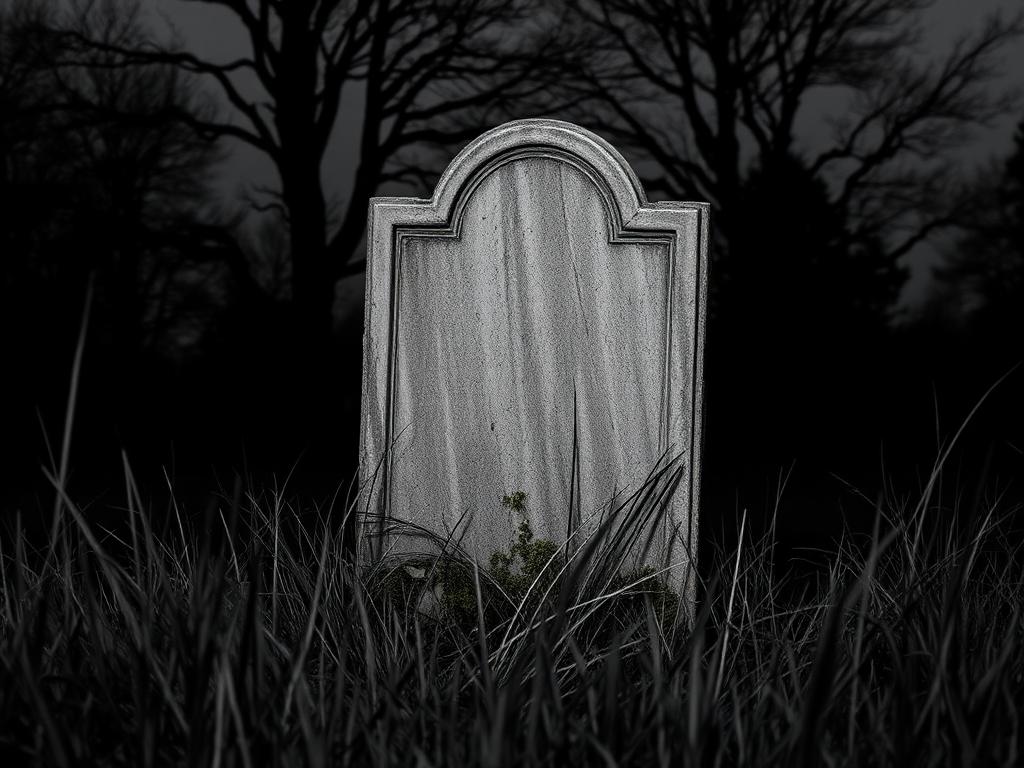
WordPress is dead. Not dying. Not pivoting. Dead. The funeral was last Tuesday and nobody sent flowers because everybody was too busy migrating their checkout to a serverless function. But every corpse deserves a headstone, and every headstone deserves an inscription. So let us gather at the graveside and decide what to chisel into the marble before the moss takes it.
“Here lies WordPress. It powered 43% of the internet and 100% of its technical debt.”
Too on the nose? Fine. Let us workshop this. Because if you are going to bury a platform that defined an era, you owe it the dignity of a decent epitaph. Or at least an ironic one.
Candidate one: 'It seemed like a good idea at the time.'
This is the headstone of a man who built a swimming pool in Scotland. It applies. In 2003, WordPress was a breath of fresh air. A blogging tool that did not require you to edit PHP files by hand just to change your sidebar. A democratisation of publishing. A revolution.
Then it became a CMS. Then an e-commerce platform. Then a membership site. Then a learning management system. Then a real estate portal. Then something that ran nuclear power plant dashboards, apparently. Each evolution was duct-taped on top of the last by a plugin economy that treated core architecture like a rental flat you are not getting your deposit back on.
- →2003: 'Publish with ease.' Elegant. Simple. Honest.
- →2010: 'There's a plugin for that.' The first warning sign.
- →2016: 'Powering 27% of the web.' Hubris.
- →2026: 'Please stop installing WooCommerce on shared hosting.' Desperation.
By the end, the original vision was so buried under commercial extensions and page-builder atrocities that Matt Mullenweg could not have identified it in a police lineup. 'Seemed like a good idea at the time' is not an insult. It is a eulogy.
Candidate two: 'It is not a bug, it is a feature — until it breaks your checkout at 3 AM.'
This one is wordy for a headstone, but we are working with a lot of material. WordPress had a genius-level ability to reclassify catastrophic failures as character-building experiences. A plugin update whitescreens your site? 'Part of the open-source journey.' A security flaw exposes your customer database? 'The community is very responsive.' Your page builder outputs eighteen nested divs to render a single button? 'Flexibility comes with trade-offs.'
The platform trained an entire generation of developers to treat instability as a lifestyle. We became Stockholm Syndrome survivors who spoke of 'managed updates' and 'staging environments' with the same reverence medieval peasants reserved for plague doctors. The fact that it worked at all was treated as miraculous rather than expected.
“WordPress did not have users. It had hostages with FTP access.”
Candidate three: 'Gone to a better place. It is called 'literally anything else.'
The afterlife is looking busy. Astro, Next.js, SvelteKit, Webflow, Framer, Squarespace, Wix, and approximately four hundred AI site generators are all fighting over WordPress's estate like relatives at a will reading. The irony is that none of them killed it. WordPress died of natural causes — specifically, natural selection, after refusing to evolve for a decade.
The headless crowd will tell you they tried to save it. 'We decoupled the frontend!' they cry, standing over the body with a defibrillator made of React components. You did not save it, Kevin. You performed taxidermy on a corpse and called it modern architecture. The frontend was not the problem. The problem was that the backend was still running on a database schema designed when Nokia was a status symbol.
- →Astro: 'I am fast and I know it.'
- →Webflow: 'I cost more but I actually work.'
- →AI builders: 'I exist because you cannot be bothered.'
- →WordPress: 'I have a plugin for — oh. Never mind.'
Candidate four: 'Beloved by agencies, survived by nobody.'
This is the cruellest truth and therefore the most appropriate inscription. WordPress was never really loved by its users. It was tolerated. What was loved — truly, passionately, wallet-open loved — was the economy that grew around it. The agencies charging $8,000 for a 'custom' theme built on a $59 TemplateMonster base. The maintenance retainers that invoiced $400 a month to click 'update' on twenty-three plugins. The hosting companies whose entire business model was 'we are slightly better than shared hosting.'
The platform was a host organism. The parasites were the business model. And now the host is dead, the parasites are looking for new bodies to inhabit. Some have moved to SaaS platforms. Some have rebranded as 'AI consultants.' Some are still standing at the graveside, insisting the corpse is just resting.
“WordPress did not die because it was bad. It died because being good enough for long enough is not the same as being alive.”
The final inscription: 'Here lies WordPress. 2003–2026. It worked until it didn't.'
That is the one. Brutal. Accurate. No embellishment. No hero narrative. Just the plain fact that everything works until it doesn't, and WordPress's 'until' lasted about five years longer than it deserved to because of inertia, sunk costs, and an army of developers who had mortgages to pay.
So leave the flowers. Skip the sermon. Do not ask for whom the update notification tolls. It tolls for thee, and for every plugin licence you will never renew, and every staging site you will never build again. The ground is fresh. The stone is blank. Pick up the chisel and write what you remember.
Or better yet — do not. The best headstone for WordPress is a redirect. 301 it to whatever you are building next, and do not look back. The dead do not read epitaphs. Only the living waste time carving them.
Found this useful? Argue with it.
More Heresies →